Does Kinstretch Help You In The Gym? What You Actually Need to Know
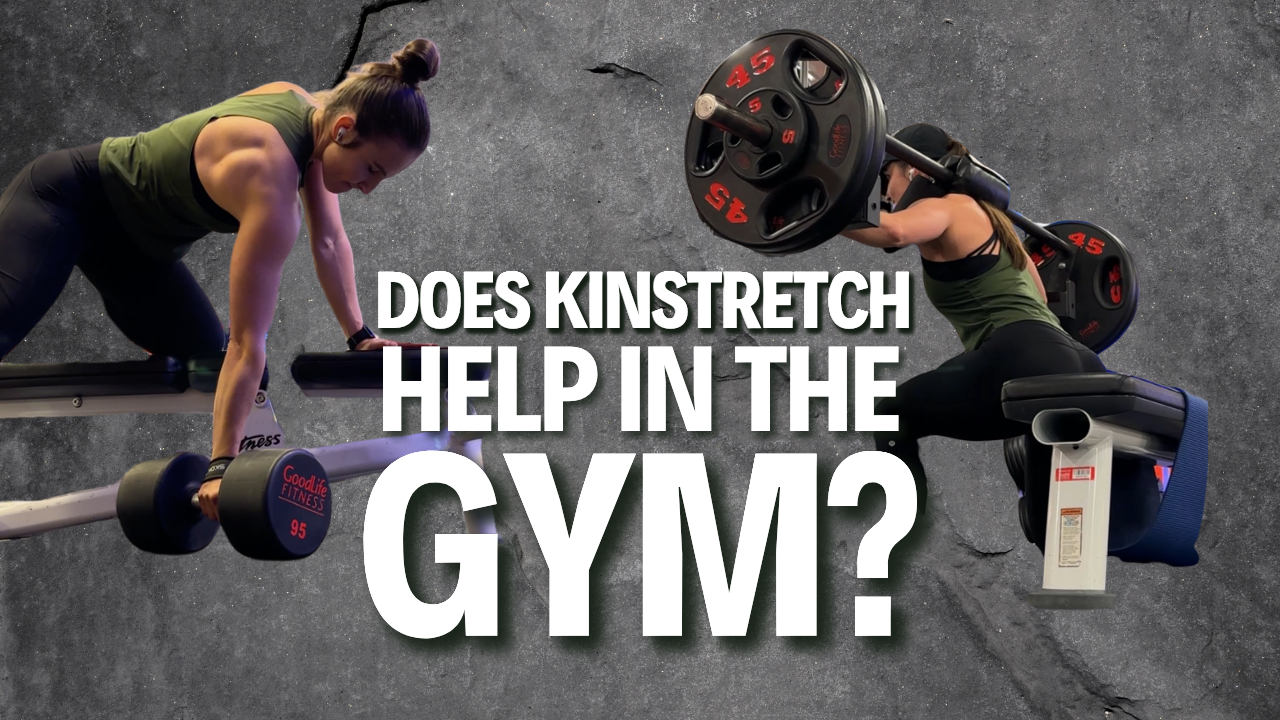
This is a common question, and it's a good one. Let's dive into it.
I think the real power here isn't the yes-or-no answer so much as it is understanding how these things can help you — how you can induce certain physiological adaptations, and how understanding your body a little better can help you make more informed choices about what types of training you integrate into your plan and when.
If you do decide to use a tool like Kinstretch, understanding the concepts behind how it works enables you to be more strategic and effective with you time.
Context Matters
Let's say you're starting a strength training program, or you're already in the middle of one, and you're wondering whether Kinstretch or mobility training is worth carving out time for.
The first thing to keep in mind is that context is important for everything. To what degree Kinstretch or mobility training helps you depends in part on what your specific goals are and what markers you're trying to move with your body.
For example: is your goal to increase your bench press weight? To add muscle mass in a specific area? To train for a 10K? All of that matters, and the answer is going to vary from person to person.
So, Does Kinstretch Help With Strength Training?
In a very general sense — yes. Introducing training methods like Kinstretch and mobility training into your routine can be extremely helpful for the overwhelming majority of people. There's an argument to be made that it can be helpful for everyone. To understand why, we have to look at what Kinstretch and what mobility training as a whole actually does.
One of the core benefits of a regular Kinstretch practice is improving the overall state and function of each individual joint in your body. Collectively, those joints are your body.
When you're using your body to accomplish a specific task, train in the gym, or perform for a specific sport, joints that are each functioning better will result in better movement, more range of motion, improved body awareness, better neurological control, and a range of positive adaptations that carry over to better performance in many different ways.
By improving the overall state of each joint in your body, you then have better hardware to use when performing specific tasks, whether that be certain exercises in the gym, sports that you participate in, or otherwise.
Improved Tolerance to Training and Reduced Pain
Another commonly reported benefit for people who integrate Kinstretch or mobility training alongside their strength training programs is that they typically find their tolerance to training increases, and they find themselves running into pain or discomfort less frequently.
Part of what contributes to this is the self-assessment piece that's baked directly into the Kinstretch practice. Through exercises like CARS (controlled articular rotations) and a lot of intentional body exploration built into each session, you're actively assessing and monitoring your joints over time. You'll catch things sooner (sometimes before they even turn into actual injuries). This means you're able to work on weak points and bring them up to speed — often finding restrictions or limitations you didn't even know you had.
The result is that not only are your joints each able to function a little better and contribute more in the gym, but you've also identified and started addressing your specific limiting factors — which, again, often translates into better movement and less pain, discomfort, or limitation.
More Freedom of Movement Means More Options in the Gym
More common feedback is that people feel like they can move much more freely after integrating a Kinstretch practice into their routine.
That freedom of movement often means they can get deeper into a squat with far less resistance or discomfort, or suddenly perform exercises they couldn't do before.
The overall library of exercises available to that person — things they can train without hitting a wall or being limited by something — tends to grow. More options, more variability, fewer roadblocks.
Why Improved Range of Motion Matters More Than You Think
Another benefit of mobility training and Kinstretch is improved range of motion across various joints in the body. Not only can people move more freely, but they often gain more range of motion in specific joints — and this is a big deal, especially if you care about longevity.
On the orthopedic side, we know that having a more complete range of motion actually promotes articular health. Better range of motion means we can take better care of our joints, and we can nourish the cartilage more — because that nourishment happens through movement. When we're able to move more fully through a more complete range of motion, we get better nourishment of the deep articular structures as well as the deep connective tissue in those joints.
But there's a strength and conditioning benefit here too. Improved range of motion actually opens the door to being able to access and progressively load tissue more effectively. Many people find it harder to increase muscle mass around a joint with very limited range of motion compared to a joint with a more complete one. Bodybuilders often see this in left-to-right asymmetries — if there's a really restricted range of motion in the left shoulder but a more full range of motion in the right, they might notice noticeably more muscle development on the right side, even if they're left-hand dominant. Improving range of motion is part of what creates the conditions for muscle growth. There are real benefits for strength and conditioning there.
Progressive Overload in Kinstretch
Here's something a lot of people miss: mobility training is very different from flexibility training.
Flexibility training is about building passive range of motion. Mobility training is about building active, usable ranges of motion that you actually have control over. That distinction matters because mobility training requires a degree of loading — and because of that, there is progressive overload built into Kinstretch itself. You're actually doing a form of strength training as you do the practice.
The focus of what you're loading, though, is what commonly gets missed or forgotten in traditional gym training: your connective tissue. Your ligaments, your joint capsules, your fascia — all of that gets a lot of love from something like Kinstretch. You're progressively loading tissue that tends to be chronically overlooked in many training programs.
In the gym, you're still loading some degree of connective tissue alongside muscle, but it's often heavily skewed toward muscle. That's part of why we see so many connective tissue injuries when people get hurt in the gym, it's often not the muscle belly itself that gives. More often it's a tendon, a ligament, or a joint. The injury tends to live in the connective tissue.
When you're running both simultaneously — when you're supplementing your strength training with joint-focused mobility work or Kinstretch — you can actually check both boxes and experience better collective results overall.
The number of benefits that carry over from this type of training into a gym setting doesn't just stop there, and the list goes on. However, that gives you a solid picture of many of the different ways it can help.
In a general sense, it's safe to say that adding Kinstretch and mobility work would benefit most people doing strength training programs. Where exactly the emphasis should be will still vary from person to person.
My Personal Experience as a Gym Rat and Physical Therapist
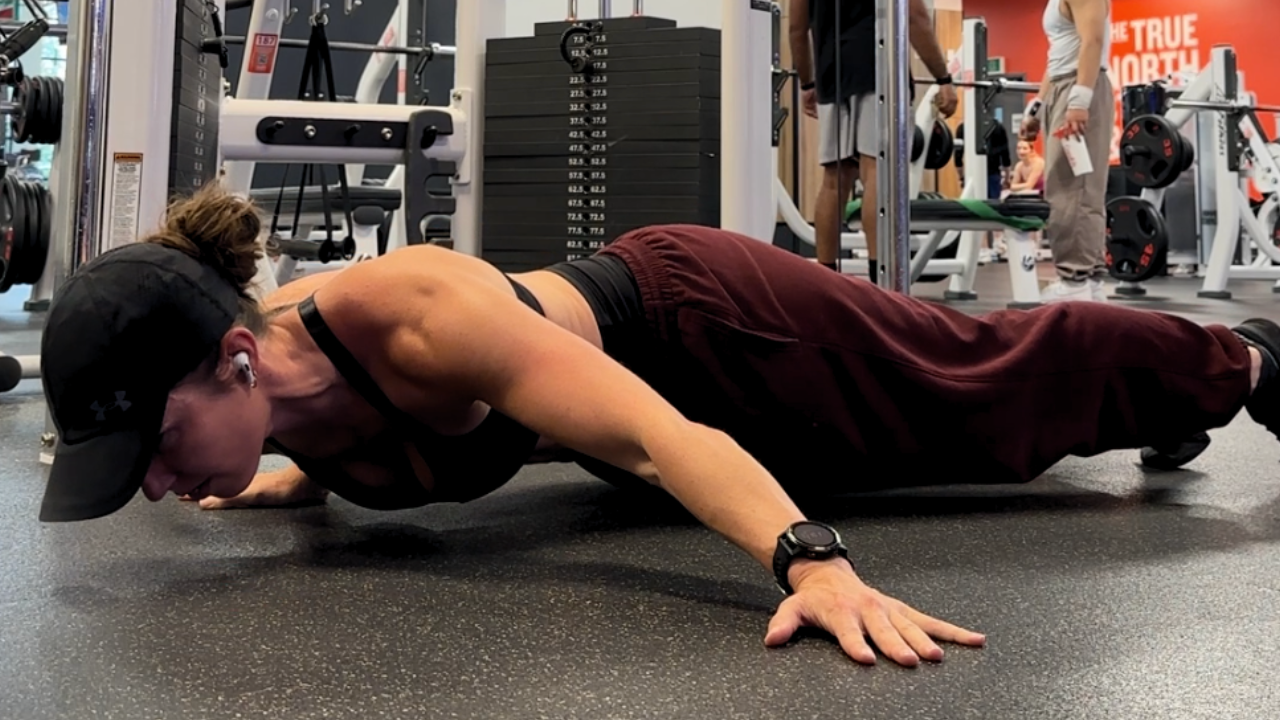
For me specifically — as someone who's been a strength training enthusiast for over two decades, and who has worked as a personal trainer/strength coach, and physical therapist for collectively over a decade — I can say that Kinstretch and mobility training have helped me immensely. I wouldn't say Kinstretch was the only factor in seeing these improvements and I must also credit various other training methods and tools I have found helpful (which I teach in Operation Human First). That said, Kinstretch has been a significant piece of it.
If I had to point to the one or two things within the Kinstretch practice itself that helped me the most, I would say it was learning both with my body and about my body.
The actual practice of physically exploring and uncovering all the different areas where I was limited with my body while accumulating tools to address & load those areas or to create space where space was restricted — was extremely helpful. The exploration and craft of all of it is invaluable and in my opinion it is under rated as well.
Beyond that, the education that came with becoming a Kinstretch instructor also gave me another lens to look through and another set of tools in the toolbox to use with thousands of clients.
Taking the information, experimenting with it, and figuring out what worked for my body has genuinely changed a lot of how I train in the gym. Many of the exercises I do now are not the standard named exercises you'd find in a program. I might be doing a weighted exercise that's very specifically designed for my hip and doesn't have a name — because through the exploration of Kinstretch, I found a specific restricted area and then figured out exactly what position and loading strategy I needed to actually train it. That skill — identifying a limitation and designing around it — has been one of the most valuable things I've taken away from the practice.
Recommendation
My biggest recommendation is to experience it for yourself. Even if you don't integrate a regular Kinstretch practice into your life permanently, spending some time experimenting with it and experiencing it will often offer you tools and information that earns a permanent place in your toolbox. Your body will thank you for the time you took to explore it and explore WITH it.
I’ll leave a link here for you where you can access various online demand class subscriptions, including the Base subscription which will give you immediate access to a massive library of classes for the price of a single in person Kinstretch class each month.
Frequently Asked Questions
Does Kinstretch help with strength training? Yes, for the vast majority of people. Kinstretch improves joint function, range of motion, body awareness, and connective tissue health — all of which support better performance, more exercise options, and reduced injury risk in the gym.
What is the difference between flexibility training and mobility training? Flexibility training builds passive range of motion. Mobility training builds active, usable range of motion that you have muscular control over. Mobility training involves loading and has progressive overload built into it — meaning you're also doing a form of strength training as you do it.
Can Kinstretch help me build more muscle? Indirectly, yes. Improving range of motion in a joint opens the door to more fully loading and accessing the tissue around it, which can support muscle growth. Bodybuilders commonly notice left-to-right muscle mass asymmetries that correspond to differences in joint range of motion.
What are CARS? CARS stands for controlled articular rotations. They are a foundational movement in Kinstretch that involve taking each joint through its full available range of motion under active muscular control. They also serve as a self-assessment tool, helping you monitor the state of your joints over time. You can find a free CARs routine and more information here.
Does Kinstretch load connective tissue? Yes. Kinstretch and mobility training progressively load connective tissue — ligaments, joint capsules, fascia — which tends to be underloaded in traditional gym training. This is one of the reasons it pairs well with strength training programs, which are typically more muscle-focused in their loading.
Author: Alex Murphy | Physical Therapist, Kinstretch Instructor, FRCms, FRSC, FRAs, FR
This blog and content is for educational purposes only and does not constitute physical therapy, medical advice, or a patient-provider relationship. While the author is a trained physical therapist, nothing here should be taken as clinical guidance specific to your situation. If you're dealing with pain, please work with a qualified healthcare provider who can assess you directly.